Medically reviewed by Dr. Priya Prakash (Rheumatologist; board certified) • Last updated: February 23, 2026
What Is Gout? Symptoms, Causes & Treatment | Clermont Rheumatologist
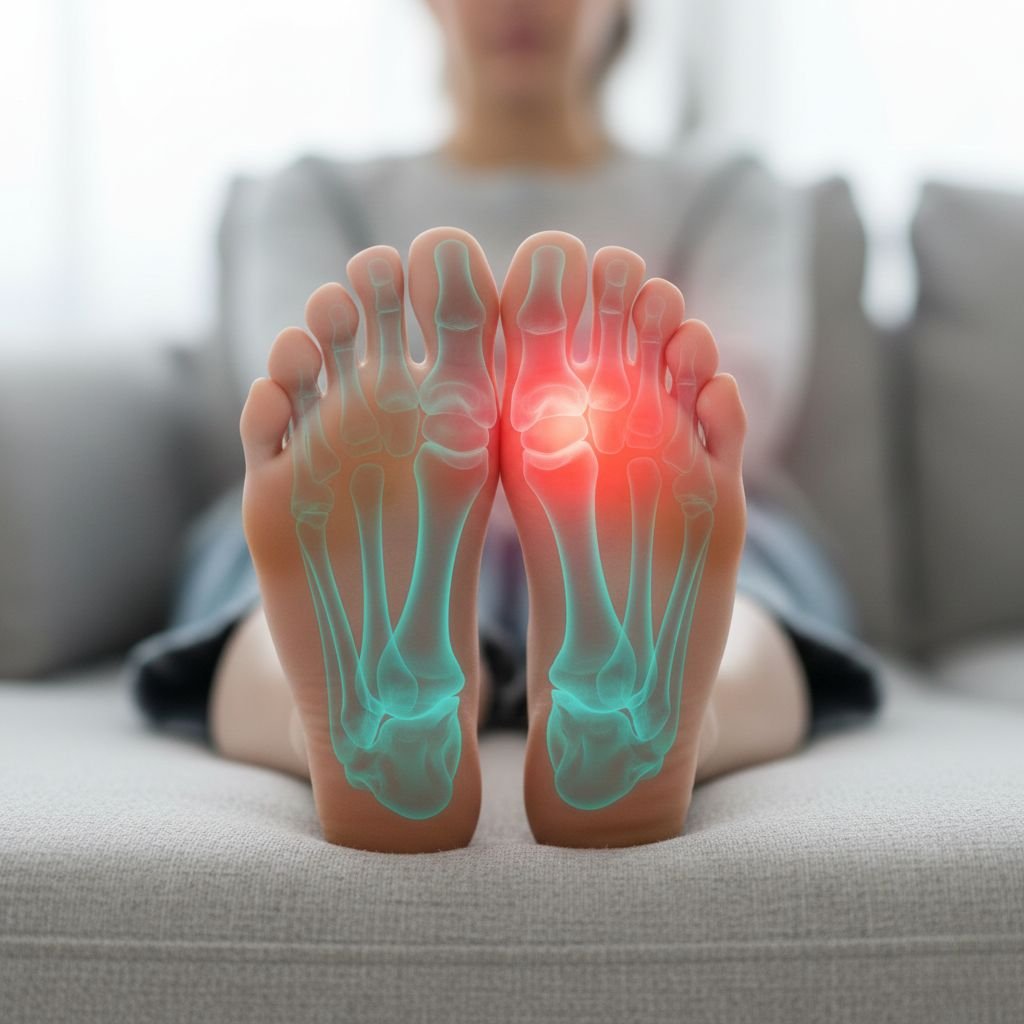
Gout is a form of inflammatory arthritis caused by uric acid (urate) crystals that build up in and around joints. It triggers sudden severe pain, swelling, warmth, and redness—often in the big toe. Treatment focuses on controlling flares and lowering uric acid to prevent recurrence.
If you’re searching what is gout, the simplest answer is that gout is a crystal-triggered inflammatory arthritis. Uric acid can rise when the body produces more urate than it clears (often through the kidneys), and crystals can deposit in joints. The result is classic gout symptoms like sudden intense pain, swelling, redness, and warmth—frequently in the big toe, ankle, or knee. A rheumatologist in Clermont can confirm the diagnosis and create a long-term gout treatment plan.
Many people feel normal between attacks, but uncontrolled gout can return, involve more joints, and cause long-term joint damage or tophi (firm urate deposits). In Clermont, Florida, gout is especially relevant for adults with risk factors such as reduced kidney function, metabolic syndrome, obesity, alcohol intake, certain blood-pressure medications (like diuretics), and high-purine dietary patterns.
Table of Contents
- What Is Gout? Simple Medical Definition
- Gout at a glance
- Gout symptoms (what a flare feels like)
- Causes & risk factors
- Understanding gout (complete explanation)
- Diagnosis (labs, imaging, joint fluid)
- Gout treatment (flare + prevention)
- Uric acid targets chart
- Gout vs pseudogout table
- Downloadable gout checklist
- Gout specialist in Clermont (local care)
- Related conditions (internal links)
- FAQs
- Conclusion + CTA
What Is Gout? Simple Medical Definition
Gout is an inflammatory arthritis caused by monosodium urate crystals forming when uric acid stays elevated over time. Crystals can collect in joints and surrounding tissues; when the immune system reacts to them, a flare occurs. In short, what is gout clinically? It’s a crystal arthritis with sudden flares and a preventable long-term cause: uncontrolled uric acid.
Gout at a Glance
🔴 Big toe (podagra): Very common first site; sudden severe pain
🔵 Ankle/knee: Frequent flare joints with swelling and warmth
🟢 Urate crystals: Trigger the inflammatory “flare” response
🟡 Chronic gout: Can lead to tophi and joint damage if untreated
Many people feel fine until the next flare.
Gout symptoms (what a flare feels like)
Typical gout symptoms include sudden severe joint pain (often overnight), swelling, heat, redness, and extreme tenderness. Many people have symptom-free periods between attacks, but flares can return and become more frequent without prevention.
🔴 Big toe (podagra) • 🔵 Ankle • 🟢 Knee • 🟡 Midfoot • 🟣 Wrist/Elbow
Diet • Alcohol
Kidney function
(Hyperuricemia)
Joint inflammation
Acute flare
Urate targets
Prevention plan
Wheel shows progression from risk → high uric acid → crystals/flare → specialist prevention plan.
Images (for patient education)
Big gout foot swelling

Urate crystal diagram

Joint inflammation

Causes & risk factors
Gout is caused by long-term elevated uric acid—most often from reduced kidney clearance, sometimes from increased production, and commonly from a mix of both. Risk rises with kidney disease, obesity/metabolic syndrome, alcohol (especially binge drinking), dehydration, and certain medications (like some diuretics).
- Kidney disease or kidney stones
- Obesity / insulin resistance
- Alcohol (beer/spirits) and sugary drinks
- High-purine foods frequently (organ meats, some seafood)
- Family history of gout
Evidence-based references (E-E-A-T)
For clinical overviews and patient guidance, see: American College of Rheumatology, Centers for Disease Control and Prevention (CDC), and National Institutes of Health (NIH/NIAMS).
Understanding Gout: Complete Disease Explanation
Gout develops when uric acid levels stay high enough for monosodium urate crystals to form. When crystals shed into the joint space, the immune system reacts strongly—causing intense inflammatory pain and swelling.
What Happens at the Cellular Level?
Uric acid crystals can activate immune pathways that recruit inflammatory cells into the joint. The result is the classic gout “attack” with redness, heat, swelling, and extreme tenderness.
Higher uric acid → crystal formation → immune activation → sudden joint inflammation + pain.
Uric acid rises either because the body produces more than usual, the kidneys clear too little, or both. Kidney function is a major reason gout can be persistent or severe in some patients.
Diagnosis (labs, imaging, joint fluid)
A rheumatologist in Clermont may diagnose gout based on a classic flare pattern, uric acid trends, and exam findings. When diagnosis is uncertain (or infection is a concern), joint fluid analysis to identify urate crystals is the most specific approach.
Lab Tests Often Ordered During Initial Evaluation
Lab tests help evaluate urate burden, kidney function, and treatment safety.
- Serum uric acid (baseline trend is more useful than a single value during a flare)
- Creatinine and estimated GFR (kidney function)
- Complete blood count and inflammatory markers when diagnosis is unclear
- Glucose/A1c and lipids if metabolic risk is suspected
Gout treatment (flare control + long-term prevention)
Effective gout treatment has two parts: controlling the acute flare and preventing future attacks by lowering uric acid when appropriate. Your gout specialist in Clermont will choose medications based on kidney function, other conditions, and attack history.
1) Acute gout treatment (during a flare)
Flares are usually treated with anti-inflammatory medicines. Treatment is most effective when started early and tailored to safety risks (kidney disease, stomach bleeding risk, blood thinners, diabetes, etc.).
2) Preventive gout treatment (lowering uric acid)
If you have recurrent attacks, tophi, kidney stones, or high urate burden, long-term urate-lowering therapy may be recommended. The goal is to keep urate low enough that crystals stop forming and existing crystals gradually dissolve, “Rheumatology guidelines emphasize a treat‑to‑target approach for urate‑lowering therapy, starting low and titrating the dose using serial serum urate measurements to achieve and maintain a level below 6 mg/dL.”
3) Lifestyle strategies that support treatment
- Hydration and avoiding dehydration during travel/illness.
- Alcohol moderation, especially avoiding binge intake.
- Reducing sugary drinks and high-fructose patterns.
- Gradual weight loss (avoid crash diets, which can trigger flares).
Uric acid targets chart
Uric acid targets vary by severity; a gout specialist in Clermont will set your individualized goal and monitor safely. The table below is a practical way clinicians often frame “risk zones” for urate crystal formation and gout control.
| Serum uric acid (mg/dL) | Practical interpretation | What it can mean for gout treatment |
|---|---|---|
| < 6.0 | Common preventive goal range | Often associated with fewer flares and crystal dissolution over time |
| 6.0–7.0 | Borderline for crystal risk in many patients | May still flare if crystals already exist or if levels fluctuate |
| > 7.0 | Higher crystal formation risk | More likely to have recurrent gout symptoms without prevention |
Case Study 1 (Example)
Patient had recurrent flares despite self-treatment. Labs and history suggested uncontrolled urate burden. A structured flare plan + long-term urate lowering reduced flare frequency over time.
Example: During a flare, your clinician may use colchicine or other anti-inflammatory options based on safety factors.
Full details: triggers, exam, lab trend, differential, and the prevention plan.
Gout vs Pseudogout (quick comparison)
Gout and pseudogout can look similar (sudden swollen joint), but they involve different crystals and sometimes different long-term strategies.
| Feature | Gout | Pseudogout (CPPD) |
|---|---|---|
| Crystal type | Monosodium urate | Calcium pyrophosphate |
| Classic joint | Big toe (podagra), ankle, knee | Knee, wrist (often) |
| Key test | Urate crystals in joint fluid | CPP crystals in joint fluid |
| Long-term prevention | Lower uric acid to prevent recurrence | Depends on cause; no urate-lowering equivalent |
Gout specialist in Clermont (local care)
If you need a gout specialist in Clermont or a rheumatologist in Clermont, Rheumatology Care Associates provides evaluation, flare planning, and long-term urate control strategies while considering kidney function and other conditions. Serving Clermont, FL and nearby areas including Minneola, Groveland, Four Corners, and Winter Garden.
Call Now for Gout Care
⭐ Google Rating: 4.7/5 (184 reviews) • Insurance accepted: Most major plans (verify with office).
Patient testimonial: “My gout attacks kept coming back. The team explained what is gout, adjusted my plan, and I’ve had far fewer flares.”
Call Now: (352) 717-0603 Request AppointmentClinic Address
Rheumatology Care Associates PLLC (RCA)
2611 S US Hwy 27, Clermont, FL 34711
Email: info@rheumatologycareassociates.com
Office hours: Mon 8:30AM–5:00PM; Tue 8:30AM–5:00PM; Wed 8:00AM–3:30PM; Thu 8:30AM–5:00PM; Fri 9:00AM–1:30PM.
Related conditions (internal links)
FAQs
Conclusion
What is gout in real life? It’s a painful but highly treatable form of arthritis—once uric acid is controlled, most people can reduce flares and protect joints long-term. If you’re dealing with gout symptoms or need a proven gout treatment plan, schedule with a rheumatologist in Clermont for diagnosis, urate targets, and prevention.
Patients from Clermont, Minneola, Groveland, and surrounding Lake County communities frequently seek evaluation for gout flares and long-term uric acid management.
Disclaimer: This article is for educational purposes and does not replace professional medical advice. Always consult with your existing healthcare provider before starting new treatments. Dr. Priya Prakash and Rheumatology Care Associates are committed to evidence-based, personalized gout care in Clermont, Florida.
© 2026 Rheumatology Care Associates. All rights reserved.