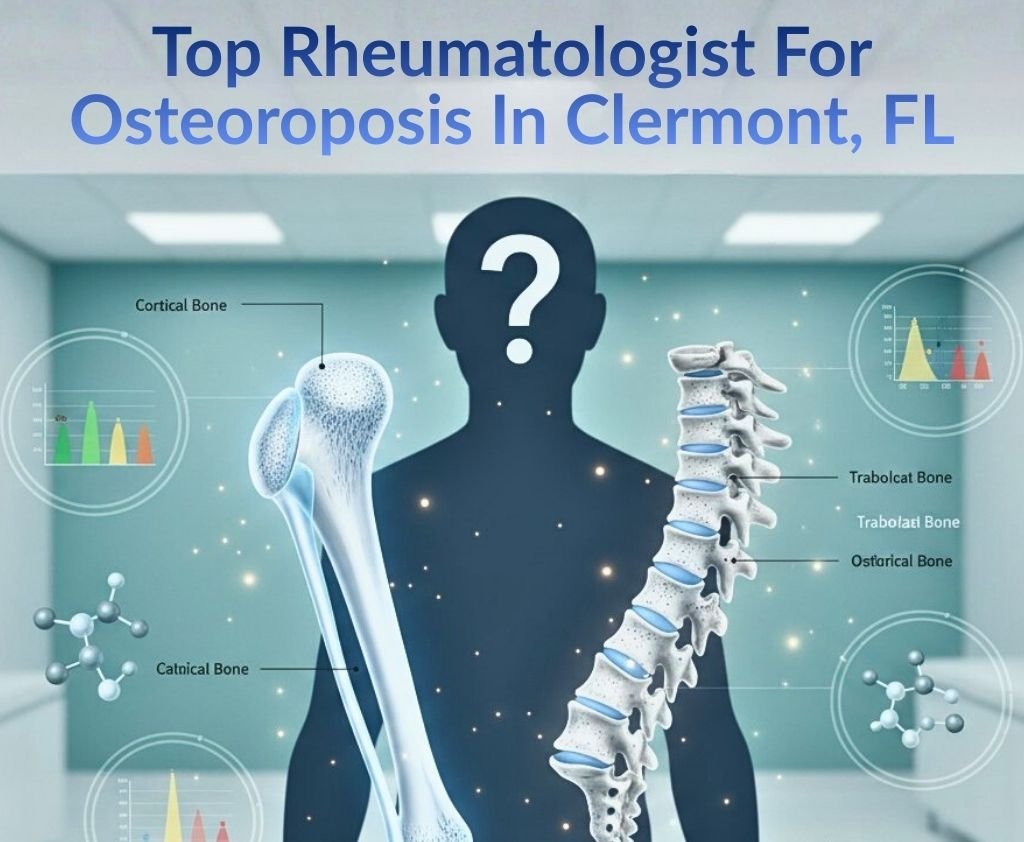
Top Rheumatologist for Osteoporosis in Clermont
Osteoporosis strikes silently, weakening bones until fractures happen unexpectedly.
Many in Clermont face this risk, especially postmenopausal women and older adults.
Expert care from a qualified specialist delivers targeted treatments to rebuild bone strength.
Dr. Priya Prakash stands out as the top rheumatologist for osteoporosis in Clermont, Florida.
At Rheumatology Care Associates, patients receive expert care backed by 15+ years of rheumatology expertise.
What Makes Expert Care in Osteoporosis Treatment Essential?
Osteoporosis reduces bone mineral density, raising fracture risk dramatically.
In Florida, over 150,000 osteoporotic fractures occur yearly, costing billions in care.
The top rheumatologist for osteoporosis in Clermont identifies risks early through DEXA scans and detailed history reviews.
Experience matters because treatments vary by patient age, fracture history, kidney function, and comorbidities.
A seasoned expert like Dr. Priya Prakash customizes plans, avoiding generic approaches.
Rheumatologists excel in osteoporosis care because bone health intersects with inflammatory arthritis management.
Understanding Osteoporosis: A Complete Disease Explanation
Osteoporosis is a progressive metabolic bone disease characterized by decreased bone mineral density and deterioration of bone microarchitecture.
This condition increases fracture risk from minimal trauma, often without warning symptoms until a break occurs.
What Happens at the Cellular Level?
Bones are living tissues constantly undergoing remodeling through two competing processes.
Osteoclasts are bone-resorbing cells that break down old bone tissue, while osteoblasts are bone-forming cells that create new bone.
In healthy individuals, these cells maintain perfect balance, preserving bone density throughout life.
In osteoporosis, osteoclasts work faster than osteoblasts can replace bone, creating a net loss of bone mass.
Over months and years, this imbalance creates progressively larger gaps in bone structure, resembling a sponge with bigger holes.
The trabecular (spongy) bone inside long bones becomes increasingly porous.
The cortical (dense outer) bone also thins, reducing overall skeletal strength by 30-50% or more.
Learn more about bone biology at NIH NIAMS Bone Health.
Epidemiology: How Common Is Osteoporosis?
Osteoporosis affects approximately 10 million Americans, with 33% of women over 70 having the disease.
In Clermont and Florida, over 150,000 osteoporotic fractures occur annually, costing the healthcare system billions.
One in three women and one in five men over 50 will experience osteoporotic fractures in their lifetime.
Hip fractures account for 300,000+ hospitalizations yearly, with 24-month mortality rates exceeding 20% in elderly patients.
See comprehensive epidemiological data at International Osteoporosis Foundation Statistics.
Pathophysiology: Why Osteoporosis Develops
Multiple pathways lead to osteoporosis development.
Estrogen deficiency: Postmenopausal women lose estrogen, which normally inhibits osteoclast activity.
Without adequate estrogen, osteoclasts become hyperactive, accelerating bone loss by 2-5% annually during the first 5-8 years after menopause.
Age-related changes: Even in men, bone loss accelerates after age 70 due to vitamin D malabsorption, calcium deficiency, and declining growth hormone.
Secondary causes: Hyperparathyroidism, hyperthyroidism, chronic kidney disease, and inflammatory arthritis all accelerate bone loss through various mechanisms.
Explore detailed pathophysiology at UpToDate Osteoporosis Overview.
Case Study 1: Margaret, 68-Year-Old Postmenopausal Woman
Chief Complaint: Margaret presented to Rheumatology Care Associates after a simple fall in her kitchen resulted in a hip fracture requiring surgery.
Medical History: Margaret had been postmenopausal for 18 years and never received bone density screening. She had no significant medical conditions but took no calcium or vitamin D supplements.
Initial Evaluation: DEXA scan showed severe osteoporosis with T-score -3.2 at the hip. Blood work revealed 25-hydroxyvitamin D level of 18 ng/mL (deficient).
Dr. Priya Prakash’s Diagnosis: Postmenopausal osteoporosis with secondary vitamin D deficiency and high fracture risk (FRAX 10-year hip fracture probability: 18%).
Treatment Plan: Dr. Prakash initiated alendronate 70mg weekly plus calcium 1200mg and vitamin D3 4000 IU daily. Physical therapy for balance and strength training 3x weekly.
6-Month Follow-up: Vitamin D improved to 38 ng/mL. No new fractures. DEXA trending better.
12-Month Follow-up: DEXA showed 4.2% improvement in hip BMD—excellent response. Fracture risk decreased significantly. Margaret reported improved confidence and pain-free mobility.
Clinical Insight: Early identification and aggressive treatment prevented further fractures and allowed Margaret to regain independence.
What Makes Expert Care in Osteoporosis Treatment Essential?
Osteoporosis reduces bone mineral density, raising fracture risk dramatically.
The top rheumatologist for osteoporosis in Clermont identifies risks early through DEXA scans and detailed history reviews.
Experience matters because treatments vary by patient age, fracture history, kidney function, and comorbidities.
A seasoned expert like Dr. Priya Prakash customizes plans, avoiding generic approaches.
Rheumatologists excel in osteoporosis care because bone health intersects with inflammatory arthritis management.
Why Choose a Rheumatologist: Benefits of Specialist Care
Rheumatologists specialize in musculoskeletal diseases, including osteoporosis.
They prescribe advanced therapies and monitor progress with objective data.
Dr. Priya Prakash has managed bone loss in thousands of patients throughout her career.
Her clinic, Rheumatology Care Associates, serves Clermont with state-of-the-art diagnostics and infusion services.
Patients appreciate her thoroughness and clear explanations of complex bone biology.
Understanding Osteoporosis: Why Expert Care Matters
Bones peak in density by age 30, then slowly decline naturally.
Osteoporosis accelerates this loss, making bones porous like Swiss cheese.
Symptoms hide until a hip, spine, or wrist fracture occurs from minor falls.
Expert evaluation via DEXA scans detects accelerated loss before breaks happen.
Early intervention restores density and cuts fracture risk by up to 70%.
Risk Factors: Who Needs Specialist Evaluation?
Women post-menopause lose estrogen, a critical bone protector.
Men over 50 also face significant risks, though often overlooked.
Family history, steroid use, or low calcium diets heighten danger substantially.
- Age beyond 65: Doubles fracture risk dramatically
- Smoking: Erodes bone mass faster, reduces treatment response
- Sedentary lifestyle: Weakens bone structure and muscle support
- Low BMI: Signals poor bone density reserves
- Chronic diseases: Kidney disease, rheumatoid arthritis, hyperthyroidism compound risk
- Medications: Steroids, cancer drugs, seizure medications accelerate loss
Dr. Priya Prakash assesses these factors precisely during initial consultation.
Diagnosis: How Specialists Confirm Osteoporosis
DEXA scan measures bone mineral density at hip and spine—the gold standard.
T-score below -2.5 confirms osteoporosis; between -1.0 and -2.5 indicates osteopenia.
FRAX tool predicts 10-year fracture probability, guiding specialist treatment decisions.
Blood tests rule out secondary causes like hyperthyroidism, vitamin D deficiency, or kidney disease.
At Rheumatology Care Associates, advanced imaging ensures accurate diagnosis without delays.
Learn more about top osteoporosis care in Clermont.
For diagnostic guidelines, see Mayo Clinic on osteoporosis diagnosis and treatment.
Lab Tests Ordered During Initial Evaluation
Calcium and vitamin D levels identify nutritional gaps.
PTH and TSH screen for endocrine contributors.
Kidney function assessment (creatinine, GFR) guides medication selection safely.
- Serum calcium and 25-hydroxyvitamin D
- Parathyroid hormone (PTH)
- Thyroid-stimulating hormone (TSH)
- Creatinine and estimated GFR
- Liver function tests
- Complete blood count
- Serum protein electrophoresis (if high-risk for myeloma)
- Bone turnover markers (CTX, P1NP) in select cases
Dr. Priya Prakash coordinates comprehensive panels for complete clinical assessment.
Learn about bone markers at Endocrine Society Osteoporosis Resources.
Case Study 2: James, 62-Year-Old Man on Long-Term Steroids
Chief Complaint: James came to Rheumatology Care Associates with back pain and concern about bone health after 8 years of prednisone therapy for chronic obstructive pulmonary disease (COPD).
Medical History: Chronic obstructive pulmonary disease for 12 years, treated with oral prednisone 10mg daily. Previous smoking history. Sedentary due to lung limitations.
Initial Evaluation: DEXA scan showed osteoporosis at lumbar spine (T-score -3.0) but only osteopenia at hip (T-score -1.8). Vertebral fracture assessment revealed 3 asymptomatic vertebral compression fractures.
Laboratory Findings: Vitamin D level was borderline low at 28 ng/mL. Kidney function normal. Calcium intake confirmed insufficient.
Dr. Priya Prakash’s Diagnosis: Glucocorticoid-induced osteoporosis with multiple silent vertebral fractures and secondary vitamin D insufficiency.
Treatment Plan: Dr. Prakash initiated teriparatide (anabolic therapy) 20 mcg daily subcutaneously—optimal for steroid-induced disease and existing fractures. Added calcium 1200mg and vitamin D3 4000 IU daily.
Coordination with Pulmonology: Worked with James’s pulmonologist to minimize prednisone when clinically possible.
6-Month Results: Back pain significantly improved. New DEXA showed 6.5% improvement in spine BMD—excellent response to teriparatide.
12-Month Results: Continued improvement with 8.2% spine BMD gain. No new fractures. James transitioned to alendronate for long-term maintenance after completing 2-year teriparatide course.
Clinical Insight: Recognition of secondary cause (steroids) and use of anabolic therapy was crucial for optimal outcome in this complex patient.
Vertebral Fracture Assessment (VFA)
Low-dose DEXA add-on images thoracic and lumbar spine directly.
Detects 70% of moderate-to-severe vertebral fractures missed on standard X-rays.
VFA helps specialists upgrade risk categories significantly when findings are present.
Silent spine fractures double hip fracture risk and collapse potential.
Read about VFA at AAFP Osteoporosis Guidelines 2023.
Top 5 Treatments for Osteoporosis
Once diagnosed, osteoporosis demands proven treatments that rebuild bone strength.
Specialists select therapies based on fracture risk, age, kidney function, and tolerance.
Dr. Priya Prakash masters these 5 cornerstone treatments for lasting protection
Treatment 1: Bisphosphonates—Foundation Therapy
Bisphosphonates like alendronate and risedronate slow bone breakdown effectively.
Weekly pills reduce hip fracture risk by 50% in high-risk women.
Specialists monitor digestive tolerance and ensure proper dosing carefully.
Dr. Priya Prakash starts patients gently, building tolerance before full dosing.
After 3-5 years, she assesses need for drug holidays to balance benefits and rare side effects.
Learn details at Mayo Clinic Bisphosphonate Guide.
Treatment 2: Denosumab—Powerful Injection Therapy
Denosumab injections every 6 months offer superior bone density gains rapidly.
This biologic blocks osteoclasts more completely than pills, reducing spine fractures by 68%.
Specialists reserve denosumab for higher-risk cases or bisphosphonate intolerance.
At Rheumatology Care Associates, Dr. Prakash coordinates injections with comprehensive monitoring.
Transition planning prevents rare rebound bone loss when stopping therapy.
Research denosumab at International Osteoporosis Foundation.
Treatment 3: Anabolics—Bone Building Powerhouses
Teriparatide and abaloparatide daily injections stimulate new bone formation.
These anabolics increase bone density by 10-13% at the spine within 18 months.
Specialists use anabolics first for patients with existing fractures or low T-scores.
Dr. Priya Prakash follows FDA guidelines limiting anabolic use to 2 years maximum.
Sequential therapy then transitions to maintenance antiresorptives for protection.
Learn about anabolics at NIH Research on Teriparatide Efficacy.
Treatment 4: Romosozumab—Breakthrough Therapy
Romosozumab monthly injections build bone while preventing breakdown simultaneously.
Year 1 vertebral fracture risk drops 73% compared to placebo groups.
Specialists select romosozumab for recent fractures or failed other therapies.
Cardiovascular risk assessment guides appropriate patient selection.
Dr. Prakash ensures smooth transitions to follow-on therapies after 12 months.
See evidence at FDA Drug Database on Romosozumab.
Treatment 5: Comprehensive Lifestyle Optimization
Calcium 1200mg, vitamin D 2000 IU daily form foundation for all medications.
Weight-bearing exercise 4-5 days weekly preserves gains from therapies.
Specialists integrate these essentials into every treatment plan consistently.
- 30 minutes brisk walking daily maintains hip and spine strength
- Resistance training 2x/week builds vertebral resilience
- Fall prevention programs save more fractures than drugs alone
- Smoking cessation doubles treatment effectiveness
- Alcohol moderation (max 1-2 drinks/day) protects remaining density
- Salt and caffeine moderation supports calcium absorption
Dr. Priya Prakash integrates lifestyle counseling at every visit.
Explore exercise guidelines at American College of Sports Medicine Exercise Guidelines.
Monitoring Progress with Specialist Care
Treatment success requires regular check-ins and objective measurement.
Specialists schedule DEXA scans every 1-2 years to track improvement.
BMD gains of 3-5% confirm therapy is working as intended.
Dr. Priya Prakash tracks FRAX recalculations and labs quarterly initially.
Side effect vigilance ensures safety through the entire therapy course.
When to Adjust Treatment: Expert Decisions
No BMD improvement after 2 years signals therapy switch may be needed.
New fractures despite treatment demand anabolic consideration and reassessment.
Specialists prevent overtreatment with strategic drug holidays carefully planned.
Bisphosphonate pauses after 3-5 years balance jaw osteonecrosis risk properly.
Rheumatology Care Associates offers infusion monitoring for transitions smoothly.
Visit our about page for clinic details.
Guidelines at AAFP Osteoporosis Guidelines.
Prevention Strategies: Why Lifestyle Matters
Prevention beats treatment every single time in osteoporosis management.
Specialists build comprehensive prevention into every patient interaction consistently.
Even those with diagnosed osteoporosis benefit enormously from lifestyle modification.
Calcium Intake: Foundation Nutrient
1200mg daily calcium is non-negotiable for adults over 50.
Dairy products (milk, yogurt, cheese) provide highly absorbable calcium.
Plant sources (leafy greens, fortified non-dairy milks) work equally well.
- Low-fat yogurt: 300mg per 6oz
- Milk: 300mg per 8oz
- Cheddar cheese: 200mg per oz
- Fortified orange juice: 250mg per cup
- Collard greens: 270mg per cooked cup
- Almonds: 80mg per oz
Dr. Priya Prakash recommends food first, supplements second always.
Calcium nutrition guide at National Osteoporosis Foundation.
Vitamin D: Critical Co-Factor for Success
Vitamin D3 2000 IU daily (minimum) enables calcium absorption completely.
Florida sunshine provides some D3, but supplementation ensures consistency.
Specialists measure 25-hydroxyvitamin D levels (target 30-50 ng/mL).
Higher doses (4000 IU daily) often needed for residents with limited sun.
Vitamin D research at NIH Bone Health Vitamin D.
Exercise: Bone-Building Activity
Weight-bearing exercise stimulates bone-forming osteoblasts directly and effectively.
30 minutes brisk walking 4-5x weekly increases hip BMD by 1-3% annually.
Specialists prescribe resistance training as seriously as medications consistently.
- Brisk walking: 30 min, 4-5x/week, builds hip/spine strength
- Weight lifting: 2x/week, 8-10 exercises, all major groups
- Tai Chi: Improves balance and reduces fall risk significantly
- Dancing: Weight-bearing, social, and fun—adherence key
- Swimming: Gentler on joints, maintains overall fitness
Dr. Prakash individualizes exercise based on current fitness level and conditions.
Exercise prescriptions at CDC Physical Activity Guidelines.
Fall Prevention: The Silent Hero
Falls cause 90% of osteoporosis fractures in people over 65 significantly.
Home safety modifications prevent more fractures than medications alone often.
Specialists recommend comprehensive fall assessment for all patients.
- Remove tripping hazards (throw rugs, cords)
- Install grab bars in bathroom
- Improve home lighting, especially stairs
- Wear supportive footwear indoors and out
- Vision checks and correction annual
- Review medications causing dizziness or confusion
- Balance training and proprioception exercises
Rheumatology Care Associates coordinates physical therapy referrals for prevention.
Fall prevention guide at CDC STEADI Fall Prevention Program.
Dietary Patterns: Mediterranean and DASH Diets
Mediterranean diet emphasizes vegetables, nuts, fish, olive oil.
DASH diet reduces sodium, emphasizes fruits, vegetables, whole grains.
Specialists recommend both equally for heart and bone health promotion.
- Limit sodium to 2300mg daily (reduces calcium loss)
- Moderate protein (1.0-1.2g/kg) supports bone without excess stress
- Limit caffeine to 3-4 cups coffee daily
- Limit alcohol to 1-2 drinks maximum daily
- Avoid sugary drinks that displace nutrient-dense choices
Dr. Priya Prakash integrates dietary counseling at every visit consistently.
Dietary evidence at American Heart Association Nutrition.
Why Clermont Patients Choose Rheumatology Care Associates
Many general doctors exist, but osteoporosis responds best with daily specialist focus.
At Rheumatology Care Associates, you see a trusted bone specialist locally.
Dr. Priya Prakash is renowned locally and regionally for expertise.
Patients choose this clinic because:
- Specialization: Osteoporosis and inflammatory bone diseases are daily focus
- Customization: Plans tailored to kidney function, heart risk, medications
- Targets: Clear bone density targets with timeline expectations
- Education: Simple, practical guidance for home management
- Monitoring: Regular DEXA scans, labs, and adjustments prevent guesswork
- Accessibility: On-site DEXA, infusions, comprehensive services
- Evidence-based: All decisions grounded in latest clinical research and guidelines
The aim is keeping you walking, working, and enjoying life without fracture fear.
When Should You Seek Specialist Care?
Schedule an appointment with Dr. Priya Prakash if:
- You are postmenopausal woman or man over 50
- DEXA scan shows osteopenia or osteoporosis
- You had fractures from minimal trauma
- Family history includes osteoporosis or hip fractures
- You take long-term steroids or bone-damaging medications
- You have kidney disease, diabetes, or thyroid problems
- You want a clear long-term plan
- Current treatment isn’t improving your BMD
Early, focused care can prevent years of pain and protect joints.
Take Action: Contact Rheumatology Care Associates Today
Don’t wait for a fracture to get expert help. Specialists here prevent disability and restore bone health.
Dr. Priya Prakash and the team welcome new patients with bone concerns.
Practical Next Steps:
- Step 1: Gather your recent DEXA results and blood work
- Step 2: Write down your symptoms, fracture history, family history
- Step 3: List all medications (including over-the-counter supplements)
- Step 4: Contact our office at your earliest convenience
Contact Rheumatology Care Associates:
Website: https://rheumatologycareassociates.com/
Contact Page: https://rheumatologycareassociates.com/contact-us/
About Dr. Priya Prakash: https://rheumatologycareassociates.com/dr-priya-prakash/
Clinic Location: Clermont, Florida
The top rheumatologist for osteoporosis in Clermont is ready to partner with you.
Your bone health is our priority. Schedule your consultation now.
Frequently Asked Questions
1. Is osteoporosis treatment available with kidney problems?
Yes. Many with osteoporosis also have kidney disease, and medicines can be adjusted carefully under specialist supervision to keep kidneys safe while protecting bones. See National Kidney Foundation guidance.
2. How long before symptoms improve?
Everyone responds differently, but with steady bone density improvement, most people see stabilization within 6 months and continued gains over 1-2 years. Our case studies show typical timelines.
3. Do I take osteoporosis medicine for life?
In most cases, yes. Osteoporosis is long-term tendency, so stopping medicine often allows density to decline again. Specialists may recommend strategic drug holidays. Learn more at NOF FAQs.
4. Can I manage osteoporosis with diet alone?
Diet changes help tremendously, but for established osteoporosis they are almost never enough alone. Medicine plus lifestyle gives the best chance. Research shows diet reduces fracture risk by only ~10-15% without medications.
5. What makes a specialist different from regular doctors?
Rheumatologists specialize exclusively in bone, joint, and autoimmune diseases. Specialists have advanced training and prescribe specialized therapies confidently. See American College of Rheumatology patient education.
6. How do I book an appointment?
You can call Rheumatology Care Associates, use the contact form on our website, or request an appointment online. Mention top rheumatologist for osteoporosis in Clermont inquiry.
Disclaimer: This article is for educational purposes and does not replace professional medical advice. Always consult with your existing healthcare provider before starting new treatments. Dr. Priya Prakash and Rheumatology Care Associates are committed to evidence-based, personalized osteoporosis care in Clermont, Florida.
© 2026 Rheumatology Care Associates. All rights reserved. Find the top rheumatologist for osteoporosis in Clermont today.