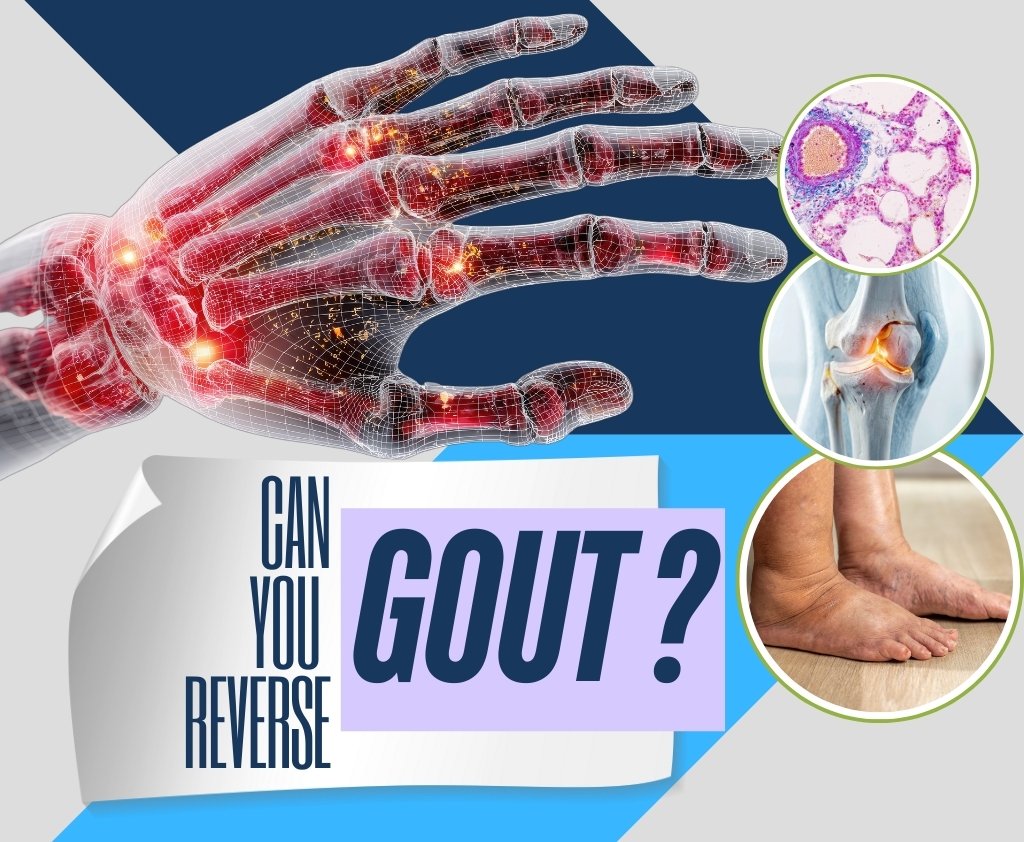
Can Gout Be Reversed? A Complete Medical Guide to Reversing Gout Safely and Effectively
Gout is one of the most commonly misunderstood forms of arthritis. Despite being highly treatable, it continues to cause unnecessary pain, disability, and fear because of widespread misinformation. Many patients are told that gout is permanent and irreversible, while others are promised unrealistic cures through diet plans, supplements, or home remedies.
The question most people are truly asking is simple but critically important:
Can gout be reversed?
The medically accurate answer is nuanced. Gout cannot be “cured” in the sense that the underlying metabolic tendency disappears forever. However, gout can absolutely be reversed clinically when treated correctly. This means uric acid crystal buildup can be eliminated, gout attacks can stop completely, and long-term joint damage can be prevented.
This comprehensive guide explains exactly what reversing gout means, how reversal occurs biologically, when reversal is possible, and why specialist-guided care dramatically improves outcomes.
Can Gout Be Reversed? Understanding the Medical Definition of Reversal
In medicine, the word “reversal” does not mean erasing genetic risk or permanently eliminating the body’s ability to produce uric acid. Instead, reversal refers to controlling the disease process so effectively that its damaging consequences no longer occur.
When gout is reversed clinically, the following outcomes are achieved:
- Serum uric acid is maintained below the crystal saturation point
- Existing monosodium urate crystals dissolve gradually
- Acute gout attacks stop occurring
- Tophi shrink or disappear
- Joint damage progression halts
- Quality of life returns to normal
These outcomes are not theoretical. They are well documented in rheumatology literature and daily clinical practice.
Why the Question “Can Gout Be Reversed?” Is So Common
Gout behaves differently from many other chronic diseases. Symptoms appear suddenly, often resolve on their own, and may not return for months or even years. This episodic nature leads many people to believe gout is temporary.
Unfortunately, this belief is incorrect.
Gout attacks come and go, but the underlying disease process continues silently. During symptom-free periods, urate crystals continue to accumulate in joints and tissues unless uric acid is actively controlled.
This explains why untreated gout inevitably worsens over time.
The Root Cause of Gout: Why Reversal Is Possible
Gout is caused by chronic hyperuricemia, a condition in which serum uric acid levels remain persistently elevated above approximately 6.8 mg/dL. At this concentration, uric acid becomes supersaturated in the blood and begins to crystallize.
Uric acid originates from three primary sources:
- Normal breakdown of the body’s own cells
- Dietary purines found in certain foods
- Endogenous metabolic processes
Contrary to popular belief, diet alone is rarely the primary cause. In most patients, gout develops because the kidneys are unable to excrete uric acid efficiently.
According to the Centers for Disease Control and Prevention, gout affects millions of adults and continues to rise due to aging populations, obesity, kidney disease, and metabolic disorders.
Why Elevated Uric Acid Leads to Gout Attacks
When uric acid levels exceed the saturation threshold, monosodium urate crystals form and deposit in joints, tendons, bursae, and other tissues. These crystals may remain silent for years.
A gout attack occurs not because uric acid is high at that moment, but because the immune system mounts an inflammatory response against existing crystals.
This immune response explains why:
- Uric acid levels can be normal during an attack
- Attacks can occur suddenly without warning
- Flares are intensely painful and inflammatory
Understanding this mechanism is essential to understanding how gout can be reversed.
Can Gout Be Reversed Naturally Without Medication?
This is one of the most common and dangerous misconceptions about gout.
The clear medical answer is: no, gout cannot be fully reversed through natural methods alone in most patients.
Dietary changes and lifestyle modifications can reduce serum uric acid by approximately 0.5 to 1.0 mg/dL on average. While helpful, this reduction is usually insufficient to dissolve established urate crystals.
Natural approaches can support gout management by:
- Reducing flare frequency
- Improving metabolic health
- Supporting kidney function
However, they do not eliminate crystal burden once gout has developed.
This conclusion is supported by evidence summarized by the Mayo Clinic.
Why Early Gout Is the Most Reversible Stage
The earlier gout is treated, the easier it is to reverse.
In early gout:
- Crystal deposits are smaller
- Joint damage has not yet occurred
- Inflammation is episodic rather than chronic
When uric acid is lowered early, crystals dissolve more quickly and remission is easier to maintain.
Delaying treatment allows crystals to accumulate silently, increasing the risk of chronic gout.
Why Gout Appears to Go Away on Its Own
A gout attack often resolves within days or weeks even without treatment. This leads many people to believe the disease is gone.
In reality, only the inflammatory response has subsided. The crystals that triggered the attack remain.
Without intervention, these crystals continue to grow, increasing the likelihood of future attacks.
Can Gout Damage Be Reversed?
The reversibility of gout-related damage depends on the stage of disease.
Joint Inflammation
Early inflammatory changes are often fully reversible with proper treatment.
Tophi
Tophi are deposits of urate crystals that form after years of uncontrolled gout. With sustained uric acid control, many tophi shrink or disappear entirely.
Joint Erosions
Advanced erosive damage is permanent. This underscores the importance of early diagnosis and treatment.
Kidney Involvement
Proper gout management reduces kidney stone risk and slows kidney disease progression.
The National Kidney Foundation recognizes gout as both a contributor to and consequence of kidney disease.
Can Gout Be Reversed With Medication?
Yes. Medication is currently the most reliable and effective method for reversing gout clinically.
Urate-lowering therapies work by reducing serum uric acid below the saturation threshold, allowing crystals to dissolve gradually.
Common medications include:
- Allopurinol
- Febuxostat
These medications are not painkillers. They target the root cause of gout.
When started correctly and monitored appropriately, they dramatically reduce gout flares and long-term complications.
Why Gout Often Worsens After Starting Treatment
Paradoxically, gout attacks may increase temporarily when urate-lowering therapy is initiated.
This occurs because lowering uric acid destabilizes existing crystals, triggering inflammation.
This effect is temporary and preventable with appropriate prophylaxis.
Why Detoxes, Cleanses, and “Flushes” Do Not Reverse Gout
No beverage, supplement, or cleanse can dissolve urate crystals.
Rapid changes in uric acid levels often worsen gout by triggering flares.
Hydration supports kidney function but does not cure gout.
Can Gout Be Reversed Permanently?
The risk of gout is lifelong, but symptoms do not have to be.
With sustained uric acid control, many patients experience complete remission for years or decades.
This is comparable to other chronic metabolic diseases such as diabetes or hypertension.
Why Seeing a Rheumatologist Improves Gout Outcomes
Gout is frequently undertreated or treated incorrectly. Many patients receive pain medications without addressing uric acid levels.
A rheumatologist specializes in inflammatory arthritis and metabolic joint diseases.
Specialist care focuses on:
- Accurate diagnosis
- Uric acid target setting
- Medication safety
- Long-term disease control
Clinics such as Rheumatology Care Associates focus on comprehensive gout management rather than episodic care.
Can Gout Be Reversed If You Have Kidney Disease?
Yes, but treatment must be individualized.
Many patients incorrectly believe kidney disease prevents gout treatment. In reality, leaving gout untreated worsens kidney outcomes.
Careful medication selection and dose adjustment allow safe and effective gout control.
What Happens If Gout Is Never Treated?
Untreated gout leads to progressive joint damage, chronic pain, disability, kidney stones, and increased cardiovascular risk.
The National Institute of Arthritis and Musculoskeletal and Skin Diseases confirms that unmanaged gout significantly increases long-term health complications.
Can Weight Loss Reverse Gout?
Gradual weight loss improves metabolic health and reduces gout risk.
Crash dieting and fasting increase uric acid production and frequently trigger gout attacks.
When Should You See a Gout Specialist?
- More than one gout attack
- Increasing frequency or severity of attacks
- Kidney disease or heart disease
- Medication intolerance
- Diet alone has failed
Expert Gout Management at Rheumatology Care Associates
At Rheumatology Care Associates, gout is treated as a chronic systemic disease.
Care is individualized, evidence-based, and focused on long-term remission.
Final Answer: Can Gout Be Reversed?
Yes, gout can be reversed clinically when treated correctly and early.
Urate crystals can dissolve, attacks can stop, and joint damage can be prevented.
The difference between lifelong suffering and long-term remission is proper diagnosis, consistent treatment, and expert care.
What Is Gout? A Clear Medical Explanation
Gout is a chronic inflammatory arthritis caused by the accumulation of monosodium urate crystals in joints and surrounding tissues. These crystals form when uric acid levels in the blood remain elevated for long periods.
Gout is not simply joint pain. It is a systemic metabolic disease with joint manifestations. Understanding what gout is helps explain why gout can be reversed when uric acid is properly controlled.
What Causes Gout?
Gout is caused by hyperuricemia, a condition in which the body produces too much uric acid or fails to eliminate enough of it through the kidneys.
Common causes include:
- Reduced kidney excretion of uric acid
- Genetic predisposition
- Obesity and insulin resistance
- Chronic kidney disease
- Certain medications such as diuretics
Diet alone is rarely the sole cause of gout.
What Does Gout Look Like?
Gout typically presents as a swollen, red, hot, and extremely tender joint. The skin over the joint may appear shiny and tight.
In early disease, gout usually affects one joint at a time.
What Does Gout Look Like in the Feet?
The most classic location for gout is the big toe, a condition known as podagra. However, gout can affect the midfoot, ankle, heel, and even the small toes.
Gout in the foot often causes:
- Sudden severe swelling
- Red or purplish discoloration
- Extreme tenderness
- Difficulty walking or wearing shoes
What Does Gout Look Like Inside the Body?
Inside the body, gout is characterized by needle-shaped urate crystals deposited within joint fluid and tissues. These crystals are invisible to the naked eye but can be seen under polarized microscopy.
Advanced imaging such as ultrasound and dual-energy CT can visualize these crystal deposits.
What Does Gout Feel Like?
Gout pain is often described as one of the most intense forms of joint pain.
Patients commonly report:
- Burning or stabbing pain
- Extreme sensitivity to touch
- Pain peaking within hours
What Does Gout Pain Feel Like Compared to Other Arthritis?
Unlike osteoarthritis, which develops gradually, gout pain starts suddenly and is intensely inflammatory.
What Is a Gout Attack?
A gout attack occurs when the immune system reacts to urate crystals, causing intense inflammation. Attacks often begin at night and reach peak severity within 24 hours.
What Causes a Gout Flare-Up?
Common triggers of gout flares include:
- Dehydration
- Alcohol consumption
- Sudden changes in uric acid levels
- Illness, surgery, or trauma
- Starting or stopping gout medication improperly
How Does Gout Start?
Gout starts silently. Elevated uric acid levels may exist for years before the first attack occurs.
Crystal accumulation precedes symptoms, which is why early treatment improves reversibility.
How Long Can Gout Last?
An untreated gout attack typically lasts from a few days to two weeks.
Without proper management:
- Attacks become more frequent
- Attacks last longer
- More joints become involved
How Is Gout Diagnosed?
Accurate diagnosis requires medical evaluation.
Diagnostic tools include:
- Joint fluid analysis
- Blood tests for uric acid
- Ultrasound or dual-energy CT imaging
Joint aspiration remains the gold standard.
How Is Gout Treated?
Gout treatment has two goals:
- Stop acute inflammation
- Lower uric acid long-term
Acute Gout Treatment
- NSAIDs
- Colchicine
- Corticosteroids
Long-Term Gout Treatment
- Allopurinol
- Febuxostat
What Gout Medicine Is Safe for Kidneys?
Many gout medications can be used safely in kidney disease with proper dosing and monitoring.
This is why specialist care is critical.
What Are the Best Over-the-Counter Treatments for Gout Pain Relief?
Over-the-counter options include NSAIDs such as ibuprofen or naproxen, but they should only be used under medical guidance.
OTC treatments do not treat the underlying disease.
Which Pharmacies Near Me Carry Gout Medication?
Most major pharmacies carry common gout medications, but availability varies.
Prescription urate-lowering therapy requires physician oversight.
Where Can I Buy Prescription Gout Medication Online With Delivery?
Licensed online pharmacies may deliver prescription gout medications once prescribed by a healthcare provider.
Are There Any Telehealth Services Specializing in Gout Treatment?
Some telehealth services offer gout care, but complex cases benefit from in-person rheumatology evaluation.
Clinics such as Rheumatology Care Associates provide comprehensive specialist care.
Are There Any Mobile Apps to Track Gout Symptoms and Medication?
Several health apps allow symptom tracking, flare documentation, and medication reminders, which can support long-term management.
Can I Order Home Test Kits for Uric Acid Levels?
Home uric acid testing kits exist but are not a replacement for laboratory testing or medical evaluation.
What Wearable Devices Help Monitor Gout Symptoms?
Wearable devices can help track activity levels, sleep, and movement limitations but cannot diagnose or treat gout.
What Foods Should Be Avoided With Gout?
Foods to limit include:
- Organ meats
- Red meat in excess
- Alcohol, especially beer
- Sugary beverages
Which Grocery Stores Offer Gout-Friendly Food Options?
Most major grocery stores carry low-fat dairy, fruits, vegetables, and whole grains suitable for gout-friendly diets.
What Are the Best Meal Delivery Services for a Gout-Friendly Diet?
Meal services offering low-purine, balanced nutrition may help some patients but do not replace medical therapy.
Are Dietary Supplements Effective for Gout?
No supplement has been proven to reverse gout.
Some supplements may modestly affect inflammation, but none dissolve urate crystals.
Can Gout Kill You?
Gout itself does not directly cause death, but it is associated with increased cardiovascular and kidney disease risk.
Can Gout Be Cured?
No permanent cure exists, but gout can be reversed clinically with sustained uric acid control.
Can You Cure Gout Permanently?
The underlying risk remains lifelong, but symptoms can disappear for years with proper treatment.
Can Gout Be Reversed? Final Medical Summary
Yes, gout can be reversed clinically.
Reversal requires:
- Accurate diagnosis
- Consistent uric acid control
- Long-term management
- Specialist-guided care
Ignoring gout or relying on myths allows permanent damage to occur.
With evidence-based treatment, many patients achieve full remission and regain normal quality of life.
Can Gout Be Reversed? A Direct Medical Answer
Can gout be reversed? This is one of the most common and important questions patients ask after experiencing their first gout attack. The short, evidence-based answer is yes—can gout be reversed clinically when the underlying cause is properly treated and uric acid levels are consistently controlled over time.
Understanding whether can gout be reversed requires looking beyond temporary pain relief and focusing on the biological process driving the disease. Gout is caused by long-term elevation of uric acid, which leads to crystal formation inside joints. When this process is stopped and reversed, gout symptoms can disappear entirely.
Can Gout Be Reversed Permanently or Only Controlled?
From a medical standpoint, can gout be reversed does not mean the body forgets its predisposition. Instead, it means the disease enters sustained remission. When uric acid is maintained below the saturation threshold, existing crystals dissolve and new ones do not form.
Clinical studies show that when uric acid is kept below 6.0 mg/dL long term, gout flares stop, joint damage stabilizes, and visible tophi shrink or disappear. In that sense, can gout be reversed is not a myth—it is a documented medical outcome.
Why Can Gout Be Reversed but Not Ignored?
Many patients mistakenly believe gout attacks are isolated events. This misunderstanding delays treatment and leads to progression. The reason can gout be reversed early but becomes harder later is because crystal burden increases silently over time.
Without urate-lowering therapy, gout typically progresses from occasional attacks to chronic joint inflammation and permanent damage. This is why early intervention is essential if the goal is reversal rather than long-term disability.
Can Gout Be Reversed With Medical Treatment?
Medical evidence clearly supports that can gout be reversed with consistent treatment. This involves medications that lower uric acid production or increase its excretion, combined with proper flare management.
Guidelines published by major rheumatology organizations emphasize long-term uric acid control as the cornerstone of gout reversal.
For authoritative medical guidance, see resources from
American College of Rheumatology
and
NHS Gout Guidelines.
Can Gout Be Reversed Without Medication?
In rare cases of mild hyperuricemia, lifestyle changes may reduce symptoms. However, for the majority of patients, can gout be reversed without medication is unrealistic.
Diet alone does not dissolve existing urate crystals. Relying solely on food changes often leads to repeated flares and delayed disease control.
Can Gout Be Reversed if You Have Frequent Flares?
Yes, even patients with frequent gout attacks can achieve reversal with proper management. However, advanced disease requires careful monitoring, dose adjustments, and long-term follow-up.
Specialist-guided care significantly improves outcomes in patients with recurrent or severe gout. For example,
gout treatment options
and
uric acid management strategies
are essential components of reversal-focused care.
Can Gout Be Reversed in the Foot and Big Toe?
The foot, especially the big toe, is the most common site of gout. Patients often ask whether can gout be reversed in the foot once pain becomes severe.
Clinical evidence shows that with sustained uric acid lowering, gout in the foot responds just as well as gout in other joints. Pain, swelling, and stiffness resolve as crystal deposits dissolve.
Learn more about
gout in the foot
and how targeted treatment helps restore mobility.
Can Gout Be Reversed Safely With Specialist Care?
Because gout is closely linked to kidney function, cardiovascular risk, and metabolic health, treatment must be individualized. This is especially true for patients with kidney disease or multiple medications.
Rheumatology-focused clinics, such as
Rheumatology Care Associates
,
emphasize evidence-based dosing, monitoring, and long-term remission rather than short-term symptom suppression.
Final Medical Perspective: Can Gout Be Reversed?
To summarize clearly and accurately: can gout be reversed? Yes—when diagnosed correctly, treated consistently, and monitored over time, gout can enter complete clinical remission.
Ignoring gout or treating only flares allows the disease to progress. Treating the cause allows reversal, symptom freedom, and prevention of permanent joint damage.